
What the Soft Skills Project Taught Us: Looking Back at the Need for Soft Skills in School Teams
Erasmus+ project: Soft Skills for High Quality Education / Published: July 2026
As the Soft Skills for High Quality Education project comes to a close, it's time to look back and take stock of what our work with educators and Teacher Support Learning Group (TSLG) leaders across the partner countries has brought us.
A confirmed need
One thing became clear: people working in education have a genuine need to develop their soft skills. It's not just about more effective collaboration with colleagues — soft skills also proved important for the wellbeing of those who work with children and adults every day. Participants joked that soft skills aren't only needed in an educational team — they're needed in every team, in every workplace — and that it's a topic worth taking seriously.
Skills that can be developed
For many, it was a surprising discovery that soft skills aren't something innate or fixed — they can be developed, given the right approaches and the right tools.
Adult learning has its own rules
It also became clear that adult learning has its own specifics: it needs to be closely tied to practice and genuinely hands-on. This isn't about knowledge being passed down from a single expert to everyone else — it's a meeting of colleagues, each of whom brings their own valuable experience and contributes it to the shared whole.
Looking ahead
The interest we saw throughout the project also revealed a gap in the systematic support for developing soft skills in education — a gap we'll keep working to close even after the project ends.
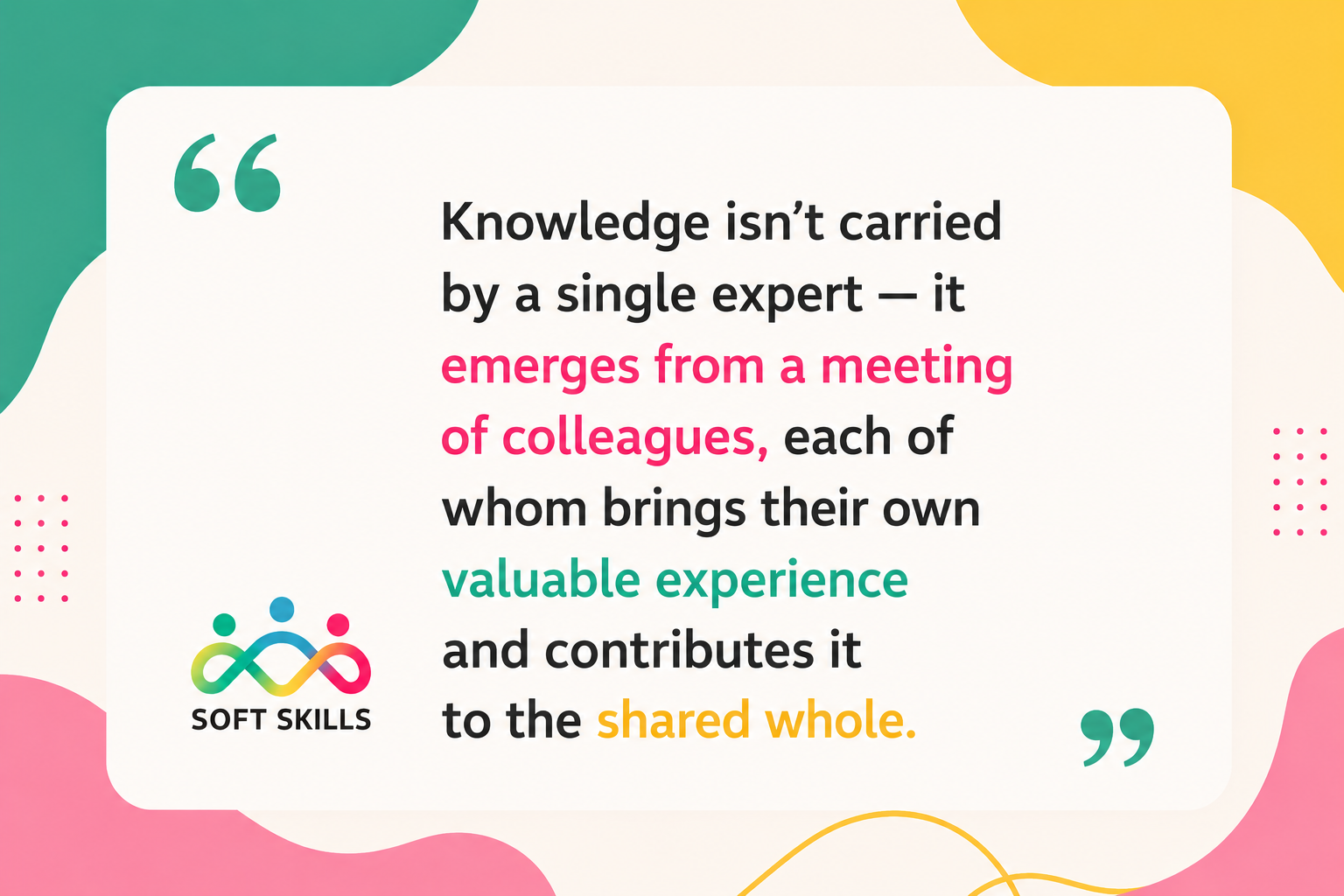
"Knowledge isn't carried by a single expert — it emerges from a meeting of colleagues, each of whom brings their own valuable experience and contributes it to the shared whole."
 EN
EN  SK
SK