Posts for Nezaradené Category

Connecting Across Borders: First International Professional Learning Community Meets in Tartu

Nezaradené - 17. May 2025

Connecting Across Borders: First International Professional Learning Community Meets in Tartu

Erasmus+ Project: Soft Skills for High Quality Education
Published: December 2024

🌍 Learning without borders

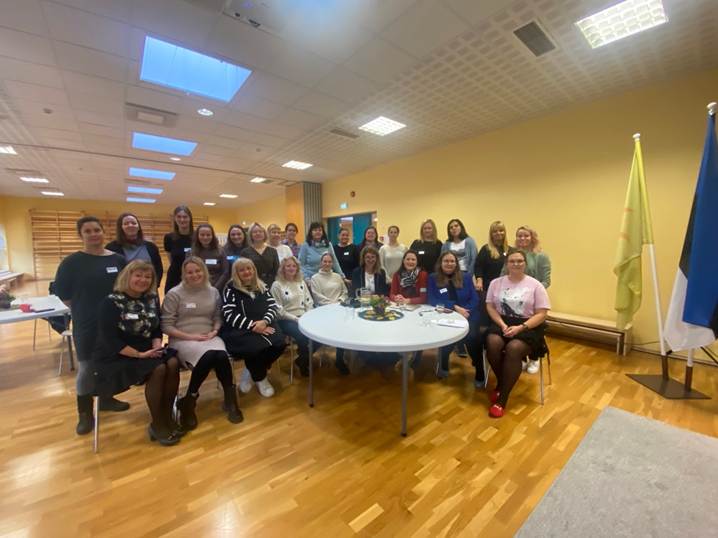
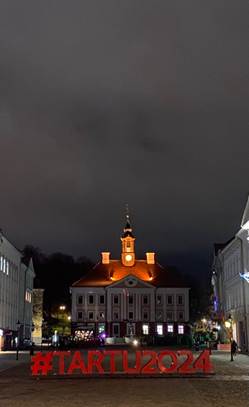
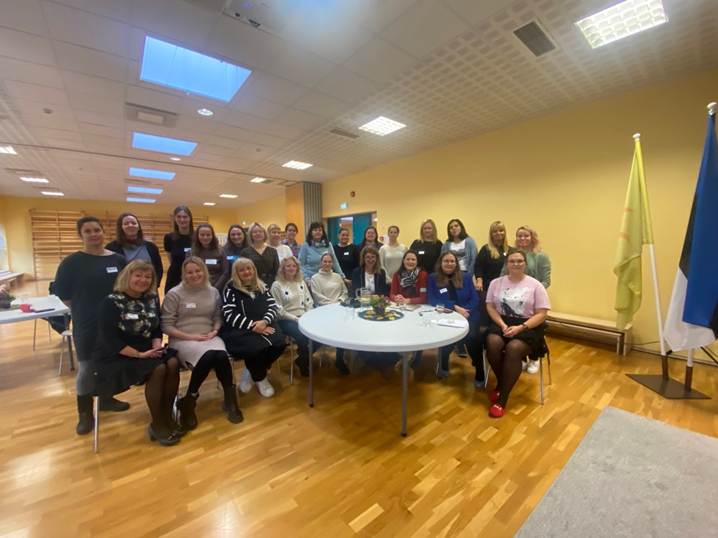
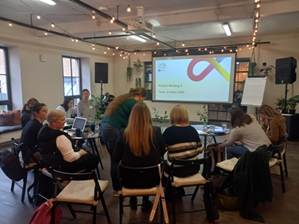
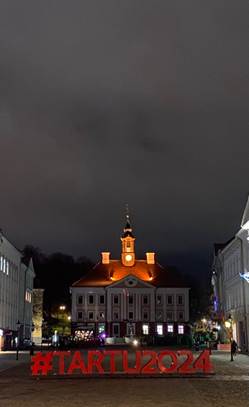
In early December, project partners from Slovakia, Slovenia, Estonia, and Croatia came together in Tartu, Estonia for the second transnational project meeting—and a landmark moment for our initiative: the first meeting of the international Professional Learning Community (iPLC).

Bringing together TSLG leaders, national trainers, and project facilitators from across the partnership, the iPLC aims to create a space for continuous peer learning, reflection, and growth around soft leadership in early childhood education.

The meeting in Tartu marked the beginning of a new layer of connection—one that reaches beyond national systems and school walls.

🤝 A space to reflect, exchange, and grow

The iPLC is designed to model the very values we promote in the project: empathy, curiosity, inclusion, and collaborative learning.

During this first gathering, participants:

  • Shared experiences from their national trainings and pilot preparations
  • Reflected on challenges in leading Teacher Support Learning Groups (TSLGs)
  • Practiced cross-cultural facilitation and feedback techniques
  • Explored the role of emotional safety in professional learning spaces

“It was incredibly inspiring to realise how similar our journeys are—even when our systems and languages differ.”
– iPLC participant, Estonia

Key takeaways

This first iPLC meeting underscored the power of horizontal learning. Participants valued:

  • Seeing concrete facilitation strategies in action
  • Discussing real-life dilemmas from different cultural perspectives
  • Gaining confidence in leading reflective conversations
  • Building new relationships that support ongoing professional growth

The iPLC is not a one-off event—it is a living space that will continue to evolve. Meetings will continue both in-person and online, creating space for exchange, feedback, and shared learning throughout 2025.

Next steps

With the iPLC now launched, we move into the next phase of the project:

  • Pilot trainings will continue in partner countries
  • Feedback from TSLG leaders will be gathered to inform the final version of the Toolbox
  • The next iPLC meeting will focus on deepening practice and showcasing examples from the field
  • We will begin developing video case studies capturing how soft leadership transforms group dynamics

Stay connected

  • We’ll be sharing more reflections, photos, and highlights from the iPLC meetings on our website and social media. Follow our journey!
Continue Reading

Connecting Across Borders: First International Professional Learning Community Meets in Tartu

Nezaradené - 17. May 2025

Connecting Across Borders: First International Professional Learning Community Meets in Tartu

Erasmus+ Project: Soft Skills for High Quality Education
Published: December 2024

🌍 Learning without borders

In early December, project partners from Slovakia, Slovenia, Estonia, and Croatia came together in Tartu, Estonia for the second transnational project meeting—and a landmark moment for our initiative: the first meeting of the international Professional Learning Community (iPLC).

Bringing together TSLG leaders, national trainers, and project facilitators from across the partnership, the iPLC aims to create a space for continuous peer learning, reflection, and growth around soft leadership in early childhood education.

The meeting in Tartu marked the beginning of a new layer of connection—one that reaches beyond national systems and school walls. 

🤝 A space to reflect, exchange, and grow

The iPLC is designed to model the very values we promote in the project: empathy, curiosity, inclusion, and collaborative learning.

During this first gathering, participants:

  • Shared experiences from their national trainings and pilot preparations
  • Reflected on challenges in leading Teacher Support Learning Groups (TSLGs)
  • Practiced cross-cultural facilitation and feedback techniques
  • Explored the role of emotional safety in professional learning spaces

“It was incredibly inspiring to realise how similar our journeys are—even when our systems and languages differ.”
– iPLC participant, Estonia

Key takeaways

This first iPLC meeting underscored the power of horizontal learning. Participants valued:

  • Seeing concrete facilitation strategies in action
  • Discussing real-life dilemmas from different cultural perspectives
  • Gaining confidence in leading reflective conversations
  • Building new relationships that support ongoing professional growth

The iPLC is not a one-off event—it is a living space that will continue to evolve. Meetings will continue both in-person and online, creating space for exchange, feedback, and shared learning throughout 2025.

Looking ahead

With the iPLC now launched, we move into the next phase of the project:

  • Pilot trainings will continue in partner countries
  • Feedback from TSLG leaders will be gathered to inform the final version of the Toolbox
  • The next iPLC meeting will focus on deepening practice and showcasing examples from the field
  • We will begin developing video case studies capturing how soft leadership transforms group dynamics

Stay connected

We’ll be sharing more reflections, photos, and highlights from the iPLC meetings on our website and social media. Follow our journey!

Continue Reading

Developing Empathetic Leaders: Training of Trainers in Zagreb Successfully Completed

Nezaradené - 17. May 2025

Developing Empathetic Leaders: Training of Trainers in Zagreb Successfully Completed

Erasmus+ Project: Soft Skills for High Quality Education
Published: September 2024

A training that didn’t just teach—it inspired

At the end of August 2024, representatives of partner organisations from Slovakia, Slovenia, Estonia, and Croatia gathered in Zagreb for the Training of Trainers (ToT) under the Soft Skills for High Quality Education project.

The goal was clear: to prepare national trainers to support the development of soft skills among Teacher Support Learning Group (TSLG) leaders in kindergartens. The result? A powerful experience, new competencies, and strengthened cross-country team spirit that continues to resonate long after the event.

What did we focus on?

Led by the Janja Zupancic from EduAkcija, the training explored key areas of soft leadership and facilitation, including:

  • Active and constructive listening
  • Supportive, non-directive facilitation
  • Building trust and creating psychologically safe spaces
  • Managing conflict in group dynamics
  • Using reflective questions and mentoring peers

The training was highly experiential and participatory. Participants didn’t just learn about facilitation—they experienced it first-hand, stepping into the roles of both group members and facilitators.

“I now better understand, why soft skills are so important in education. I left feeling more confident—and more humble.”
– ToT participant, Slovakia

International peer learning in action

Beyond individual skill-building, the training served as a space for forming a community of practice across countries. Sharing national experiences showed that the challenges faced by teacher support learning group leaders are strikingly similar, regardless of context.

Discussions touched on key practical issues, such as:

  • How to motivate colleagues toward open reflection
  • How to manage passivity or dominance within a group
  • How to ensure that TSLG meetings become spaces for real professional growth

What’s next for the project?

Participants left Zagreb full of motivation, inspiration, and energy. Each national partner has now begun adapting the training to their own country context—taking into account local needs, cultural considerations, and how TSLGs function within different education systems.

In the coming months, we will:

  • Launch national pilot trainings in partner kindergartens
  • Finalise and test the Soft Skills Toolbox
  • Host the first meeting of the international professional learning community (iPLC) during our upcoming project meeting in Estonia
Continue Reading

Developing Empathetic Leaders: Training of Trainers in Zagreb Successfully Completed

Nezaradené - 17. May 2025

Developing Empathetic Leaders: Training of Trainers in Zagreb Successfully Completed

Erasmus+ Project: Soft Skills for High Quality Education
Published: September 2024

A training that didn’t just teach—it inspired

At the end of August 2024, representatives of partner organisations from Slovakia, Slovenia, Estonia, and Croatia gathered in Zagreb for the Training of Trainers (ToT) under the Soft Skills for High Quality Education project.

The goal was clear: to prepare national trainers to support the development of soft skills among Teacher Support Learning Group (TSLG) leaders in kindergartens. The result? A powerful experience, new competencies, and strengthened cross-country team spirit that continues to resonate long after the event.

What did the training focus on?

Led by the Janja Zupancic from EduAkcija, the training explored key areas of soft leadership and facilitation, including:

  • Active and constructive listening
  • Supportive, non-directive facilitation
  • Building trust and creating psychologically safe spaces
  • Managing conflict in group dynamics
  • Using reflective questions and mentoring peers

The training was highly experiential and participatory. Participants didn’t just learn about facilitation—they experienced it first-hand, stepping into the roles of both group members and facilitators.

“I now better understand, why soft skills are so important in education. I left feeling more confident—and more humble.”
– ToT participant, Slovakia

International peer learning in action

Beyond individual skill-building, the training served as a space for forming a community of practice across countries. Sharing national experiences showed that the challenges faced by teacher support learning group leaders are strikingly similar, regardless of context.

Discussions touched on key practical issues, such as:

  • How to motivate colleagues toward open reflection
  • How to manage passivity or dominance within a group
  • How to ensure that TSLG meetings become spaces for real professional growth

What’s next for the project?

Participants left Zagreb full of motivation, inspiration, and energy. Each national partner has now begun adapting the training to their own country context—taking into account local needs, cultural considerations, and how TSLGs function within different education systems.

In the coming months, we will:

  • Launch national pilot trainings in partner kindergartens
  • Finalise and test the Soft Skills Toolbox
  • Host the first meeting of the international professional learning community (iPLC) during our upcoming project meeting in Estonia

We are entering an exciting phase where the project’s core ideas will start taking root in real-world practice—empowering local TSLG leaders and building a culture of collaborative reflection in early education.

Continue Reading

Why Soft Skills Are the Key to Quality Early Childhood Education

Nezaradené - 17. May 2025

Why Soft Skills Are the Key to Quality Early Childhood Education

Erasmus+ Project: Soft Skills for High Quality Education
Published: June 2024

🌱 What makes a teacher not just effective—but transformational?

In early childhood education, it’s not only about what teachers know. It’s about how they connect—with children, with families, and with each other.

The ability to listen, build trust, resolve conflict, and lead with empathy—these are the essential yet often overlooked ingredients of strong educational leadership. They are known as soft skills, and they’re at the heart of what makes early education not only functional, but deeply human.

“Soft skills are not extra. They’re essential.”
– Project partner, Slovenia

Why Are We Focusing on Soft Skills?

This Erasmus+ project is built around the belief that soft leadership is foundational to high-quality early childhood education. In particular, we focus on supporting leaders of Teacher Support Learning Groups (TSLGs)—groups of educators who reflect together to improve practice.

But many TSLG leaders feel unprepared for this role. They may know how to organize a meeting, but struggle to:

  • Encourage equal participation
  • Navigate interpersonal tension
  • Listen actively and reflectively
  • Create a climate of safety and trust

Our project addresses this gap.

What We’re Doing

The project Soft Skills for High Quality Education brings together partners from Slovakia, Slovenia, Croatia, and Estonia. Together, we will:

  • Conduct national-level research on the needs of TSLG leaders
  • Develop a shared training framework on soft skills
  • Build a practical, multilingual Toolbox full of techniques, videos, and reflective tools
  • Establish an international learning community of TSLG leaders
  • Share all outputs through the ISSA Knowledge Hub

Right now, we are in the research and planning phase. Partners are completing focus groups and national surveys to understand the current situation in kindergartens.

🔍 What We’ve Learned So Far

Early findings confirm what many suspected:

  • TSLG leaders often feel isolated in their role
  • They lack structured opportunities to develop facilitation skills
  • Emotional and communication challenges are common
  • There is strong interest in developing soft skills—but few accessible tools

This feedback is shaping the design of our training and materials.

What Comes Next

Over the next year, we will:

  • Finalize the Soft Skills Training Framework
  • Prepare and deliver a Training of Trainers (ToT) for national partners
  • Begin piloting the training in kindergartens in 2025
  • Launch the first modules of the Toolbox
  • Facilitate the first international professional learning community (iPLC) meetings

Our goal is to create lasting change by empowering leaders with the skills they need—not only to manage teams, but to inspire growth and inclusion.

Stay Connected

As the project progresses, we will be sharing key findings, training experiences, and educator stories from across Europe. We invite you to follow along.

Continue Reading

Intergenerational Learning in Play and Learning Hubs in Slovakia

Nezaradené - 27. March 2025

Intergenerational Learning in Play and Learning Hubs in Slovakia

After the outbreak of war in Ukraine, Škola dokorán – Wide Open School n.o. in
cooperation with UNICEF launched six Play and Learning Hubs in Slovakia. Spread
across Slovakia in Košice, Prešov, Žilina, Poprad, Spišská Nová Ves and Tatranská
Lomnica, their goal is to connect Ukrainian and Slovak children and enhance inclusion
among them. The Hubs are a nurturing, educational and safe space where the children
can play, make new friends, work on various creative projects together and learn many
new things. It is also a space for young children to spend relaxing time with their
parents and grandparents, as well as other caring adults

Before the war, the Play and Learning Hubs operated by Škola dokorán – Wide Open School
n.o. were mostly in pre-school and elementary school environments, where they were
attended by children from Slovak, Romani and Hungarian communities. The outbreak of the
war in Ukraine confirmed that play in a safe and nurturing space is a universal need and Play
and Learning Hubs can be tailored to any target group in almost any context.
Although the name might suggest that it is mostly children who spend their time in the Play
and Learning Hubs, this is not entirely true. As described above, the main goal is to create
a stimulating and inclusive space for children in a non-formal environment; however, it is
very important, to involve adults as well.
Some of the workshops organized in the Hubs are intended for adults only with a separate
programme being organized for their children. Such workshops for adults include e. g.
lectures on psychological support, prevention of violence against children or prevention of
human trafficking. All workshops are organized based on the needs of the local target group.
However, most of the activities in the Hubs are designed in a way, which enables the adults –
whether they are parents or grandparents or other caregivers – to play, learn, or create
together with children.
Because the families from Ukraine are coming from a very difficult situation, they
understandably want to spend as much time together as possible. Thus, the aspect of
intergenerational learning is very strong. Even the older adults have become involved, such as
Anna an active participant in the Hub in Tatranská Lomnica. Anna does not have any children

and came to Slovakia by herself. She felt scared and lonely. In her late sixties, she could not
imagine starting over in a new place from scratch. Then she heard about the play and learning
hub and started visiting it regularly. She plays with the children, helps with the creative
activities and reads stories to the youngest children. Anna says: “I feel ten years younger.
Thanks to the play and learning hub I found a reason to live again.”
Her story is very inspiring and proves that the play and learning hubs are very beneficial not
only for the children, but also for their parents, grandparents and other adults providing a safe,
playful and inclusive space for all.

For more information about the TOY for Inclusion Play and Learning Hubs in Slovakia
contact:
Škola dokorán – Wide Open School n. o.
Baštová 343/5
811 03 Bratislava – Staré Mesto
Slovak Republic
E-mail: info@skoladokoran.sk

Continue Reading

Play and Learning Hubs

Nezaradené - 27. March 2025

Play and Learning Hubs

Space that helps children forget what has happened at home, learn and develop
in a non-formal environment and integrate into a new community

In cooperation with UNICEF, Škola dokorán – Wide Open School n.o. has launched the Play and Learning Hubs Project. It aims at connecting Ukrainian and Slovak children and enhancing inclusion among them. It is also a space where parents can spend time with their children. It provides a nurturing, educational and safe environment where they can play, make new friends, work on various creative projects and do their homework.

Škola dokorán – Wide Open School n. o. – is an open non-profit organisation focusing on community development and life-long learning. Its ambition is to create conditions enabling all families, particularly those with young children, to live in an adequate and respectful environment, to have access to quality education and social services and to rely on an open and competent administration which meets their needs.
“Our organisation is active on local, national and international level,” says Miroslav Sklenka, the director of Škola dokorán. “It is an active member of the international network of the International Step by Step Association (ISSA) located in the Netherlands, to date consisting of more than 100 member organisations from almost all continents, which implements numerous projects aimed at increasing quality of care and education for young children, their families and caregivers. After the outbreak of the war in Ukraine UNICEF contacted our colleagues from ISSA, asking if there are any activities focusing on young children being implemented in the neighbouring countries. As our organisation is the only fully-fledged member of this network in Slovakia, cooperating with leading early childhood experts and with access to all learning materials and methodologies, we were automatically chosen for interviews which led to the implementation of the Play and Learning Hubs Project.”
Previously, play and learning hubs were mostly used in pre-school and elementary school environment, where they were attended by children from Slovak, Romani and Hungarian communities.

However, as the coordinator of the project in Slovakia Miroslav Balon points out, they can be tailored to basically any group: “The main goal is to create a stimulating and inclusive space for children. It is very important, both for us and for the youngest ones, to be allowed to be there with their parents as well. They learn in a non-formal environment.”
Although the name might suggest it is mostly children who spend their time in the play and learning hubs, this is not entirely true.
The creators of the project have not forgotten the adults who are regularly offered workshops on different topics.
“Music, art or creative workshops… Intergenerational learning, group sport activities or lectures on psychological support, prevention of violence against children or prevention of human trafficking. It means we always provide the community with what it currently needs,” says Miroslav Balon.
They also invite legal, medical and migration experts or specialists focusing on development of parenting skills. These hubs are currently located in six locations throughout Slovakia: Tatranská Lomnica, Spišská Nová Ves, Poprad, Žilina, Prešov and Košice.
“We are surprised how quickly children adapt to our society even though their situation has been extremely difficult – they just have to be treated the right way,” says Miroslav Balon, adding: “A number of Ukrainian children who started the school year in Slovak elementary schools had difficulties integrating in the community and stopped attending school in Slovakia, preferring the Ukrainian online instruction instead. In the locations of our play and learning hubs, there have been zero cases like this. This is what we consider to be one of the biggest contributions of the programme.”
The integration activities for Slovak, Ukrainian and Romani children have already been implemented during the summer holidays in July and August. For example more than 400 children participated in the summer camp in Žilina alone. The area of Vysoké Tatry also provides ideal conditions for day trips. Lucia Prokešová works as a coordinator in the Tatranská Lomnica Play Hub. “Children have recently visited a dairy farm where they learned about dairy production. In Spišský Hrhov, they were shown how bread is baked and how honey is collected. We also visited the Museum of the Tatra National Park. Children
were, naturally, very interested in what to do if they happen to encounter a bear.”

In all of these events, children were accompanied by their parents. In this way they not only participated in the learning process but also had a nice time with their children full of memorable moments. Most hiking trips and outings in Tatranská Lomnica are organized during the weekends. However, the play and learning hub workers are equally busy on weekdays. With the support from UNICEF, they have organized e.g. dance classes or even a drama club.
According to Peter Strážik from Škola dokorán, education is a significant part of the play and learning hubs: “The play and learning hubs are attended by many schoolchildren who have to master the basics of the Slovak language to be able to integrate into Slovak classrooms. For this purpose, qualified teachers in play and learning hubs help both children and their parents to learn Slovak.” 
This is based on the above-mentioned non-formal approach to education: “By means of game-based activities we teach children names of colours, fruits and vegetables and make them repeat after us,” says Lucia Prokešová. “Sometimes the youngest children, about two years of age, do not understand. What I mean is they understand all we say, but do not comprehend why we use words for an apple or a pear other than those they are familiar with.”

Play and learning hubs help parents with time-management Even though the hubs enable adults to play and spend time with their children, they do not necessarily need to do it all the time, especially if they have other duties. Jiliana Daničenková from Zaporizhzhia Oblast, who arrived in Slovakia in March and settled down in Prešov, appreciates this: “Until recently I used to pick up my daughter Mária from school at 12 o’clock, which was very difficult as I had many obligations. My life has turned into a hamster wheel of appointments with different authorities when I was trying to get my documents done, one by one. Of course, I had to take Mária everywhere with me.”

Ever since a play and learning hub was established at the Joint School of Taras Ševčenko with Ukrainian Language of Instruction in Prešov, she has had more time and can dedicate her full attention to her job. She knows that her child is well taken care of and that she can pick her up at 4 pm. Viera Teťunová fled from Kharkiv with her daughter Saška in the first days of the war in Ukraine: “We’ve got used to Prešov. We’ve made new friends, a new network. Saška is much better at Slovak than I am. The other day I didn’t understand what the shop assistant was telling me, but luckily my little girl took care of it. Let’s see how long this whole situation takes. Naturally, spoken Slovak won’t be enough in the future and we’ll also need to learn your grammar.” The women find it extremely hard to talk about their painful memories from Ukraine. Both of them want to go back home, even if they have no idea at the moment when it will be possible.
Miroslav Balon has talked to many parents: “Yes, there are many who want to go back, but it depends. These are mostly parents from Western Ukraine. People from the Eastern part have a different attitude. Many of them have lost their homes and realize they’ll probably stay and settle down here. These families deal with completely different challenges. They are provided with individual assistance here in the play and learning hub as well. There are also many parents who’ve arrived from the neighbouring city of Uzhhorod. The reason was simple – their children had been hearing alarm sirens warning of possible air raids too often. It was stressful for them, so they decided to come to Slovakia to protect their children.”
Alexandra Biková and her four children have found their safe second home in Tatranská Lomnica. “We are very happy to be in Slovakia. The play and learning hub has helped children forget the war misery. Meeting their friends here is very comforting to them.”
Several Ukrainians have used their temporary residence in Vysoké Tatry as a work opportunity and got employed in tourism. Only after the play and learning hub was launched, they were able to dedicate their full attention to their new jobs. The project thus indirectly makes it easier for parents to get back up on their feet. Incidentally, one of the upcoming courses will focus on financial education.

Children will keep on playing no matter what 

One of the advantages of the play and learning hubs is that children can borrow toys and take them home just like in a library. The programme of different hubs is adapted to the individual needs of their attendees. Projects focusing on play and learning hubs are implemented in eight European countries. It is not a coincidence that play and learning hub concept is used to support Ukrainian children. Viera Teťunová, the mother of little Saška, says sometimes she literally has to carry her daughter out of the play hub, if she does not want her to stay and play there overnight. “Saška wants to be a doctor and spends her time dressing up in a white coat and playing with the stethoscope. Even though she could take the toy home, she would not have any friends there to examine.”
Boys, on the other hand, love the popular building blocks, which thanks to UNICEF were provided by Lego. Many other educational toys were purchased in the play and learning hubs and financed by UNICEF. Robert and Klim Biko are twins. They are good at constructing buildings and cars. They also enjoy attending the hub because of their new friends. Thanks to them, they do not feel so lonely anymore.

The activities in the hubs are also adapted to the season. Nikola Stachová, a coordinator of the play and learning hub in Prešov, was surprised that many children love autumn: “Children and their mums were collecting leaves, chestnuts and nuts and we glued them to paper. Even the youngest children took part. We had a lot of fun! All their works were then put on display on the wall. We did not plan to score them, but children secretly did it among themselves anyway.” They often need to think hard about the new topics to prepare for the visitors, because sometimes the children are sad and withdrawn. However, new stimuli can free them of dark thoughts. “We also play the role of ‘psychologists’. Trainings we have participated in, were very beneficial in this sense,” says Nikola Stachová. “Sometimes it is not easy. For example, situations where children argue over a toy can be solved quickly. However, many of them miss their fathers who stayed behind in Ukraine. In such cases, we hear them out, comfort them and cheer them up, even if it isn’t always easy. We can’t even imagine what they’ve been going through.” Tears are not forbidden here – quite the opposite. Laughter is allowed, too, and is continuously present along with children’s screams and creativity.
Lucia Prokešová concludes: “You witness emotions at all times here. Joy, grief, anger, happiness… The important thing is that children are always happy to come back. We never force anyone to participate in an activity. If they want, they can join in. If not, it’s up to them. Just recently, a boy who is generally very naughty has broken out in tears during a trip and rushed to find his mum. We often don’t realize why such things happen, but then we remember that we have absolutely no idea what traumas they’ve been carrying with them. None of us can completely identify with their situation, but we are here to help them. And their faces show us that we’re doing it right. The play and learning hub is an ideal environment for that.”

Continue Reading
en_USEN